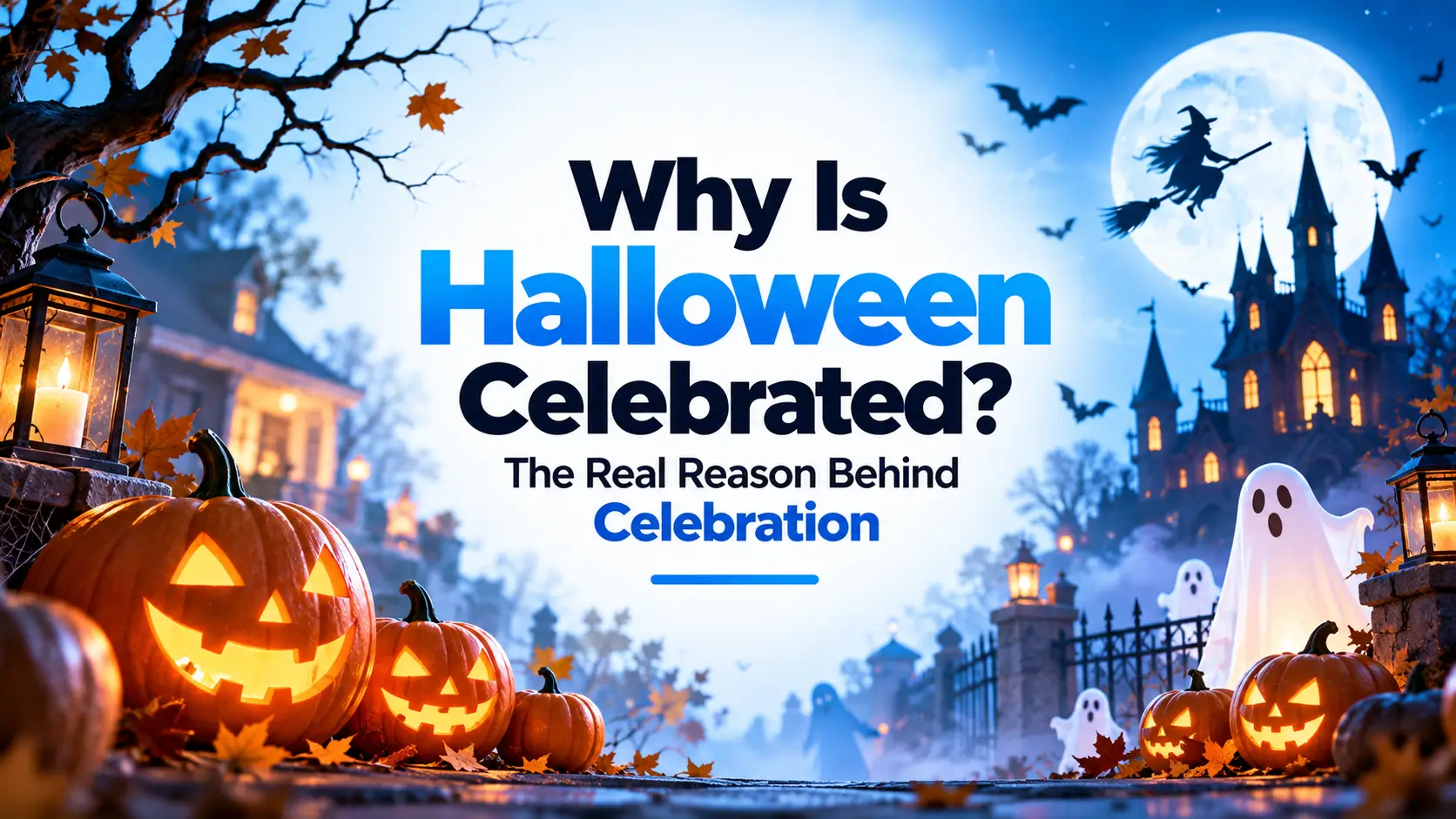
Halloween is celebrated every year on 31 October, and the images associated with it: costumes, carved pumpkins, trick-or-treating and spooky decorations, are instantly recognisable across the world.
But the origins of Halloween go back well over a thousand years, long before plastic skeletons or neighbourhood candy runs existed.
Understanding why Halloween is celebrated reveals a layered history that connects ancient Celtic rituals, early Christian traditions and centuries of cultural change. Here is the real story behind the celebration.
Key Takeaways
- Halloween originates from Samhain, an ancient Celtic festival marking the end of the harvest and the beginning of winter on 31 October.
- The Christian church introduced All Saints’ Day and All Souls’ Day, absorbing older Samhain customs into what became All Hallows’ Eve.
- Halloween, brought to North America by Irish and Scottish immigrants, merged with local traditions and became a global event through commercial expansion.
- People celebrate Halloween for many reasons, from cultural tradition to costume parties.
- Trick-or-treating, costume parties, horror movies, and themed decorating are all fun Halloween traditions. Trick-or-treating, costume parties, horror movies, and themed decorating are all fun Halloween traditions.
- Halloween parties, community trick-or-treats, and themed celebrations have become popular in Australia.
Why Is Halloween Celebrated? The Celtic Origins
Halloween traces its roots to Samhain, an ancient Celtic festival observed at the end of October to mark the transition from the harvest season into the dark half of the year.
The Celts believed that on the night of 31 October, the boundary between the world of the living and the world of the dead became unusually thin, allowing spirits to pass through and return to earth.
People lit bonfires, made offerings to appease wandering spirits, and wore costumes or disguises to avoid being recognised by the dead. Samhain was not a morbid occasion but a practical community ritual for entering winter safely.
The Christian Influence: All Saints’ Day and All Souls’ Day
When the Roman Catholic Church expanded into Celtic regions during the early medieval period, it introduced All Saints’ Day on 1 November and All Souls’ Day on 2 November as occasions to honour the dead and pray for souls in purgatory.
The evening before All Saints’ Day became known as All Hallows’ Eve, which shortened over time to Halloween. Rather than replacing the older customs, this Christian framing absorbed many of them, blending folk ritual with religious commemoration across several centuries. The result was a celebration that carried both traditions simultaneously.
How Halloween Spread to the Rest of the World
Irish and Scottish immigrants who arrived in North America during the 18th and 19th centuries brought their Halloween customs with them. In the new world, these practices merged with local harvest traditions, producing new customs over time.
By the late 19th century, Halloween had become a community-centred holiday involving neighbourhood gatherings, costumes and autumn festivals.
The commercial expansion of Halloween through the 20th century, driven by the candy industry and later by film and television, transformed it into the large-scale global event it is recognised as today.
Why Do People Celebrate Halloween Today
Why do people celebrate Halloween varies significantly from person to person and from country to country. For some it is a cultural tradition tied to family and community, marked through costume parties, trick-or-treating and seasonal gatherings.
For others it is primarily a social occasion: an excuse to dress up, attend events and enjoy the theatrical, spooky side of the season.
In countries outside the United States and the United Kingdom, including Australia, Halloween has been adopted largely as an entertainment event rather than one with strong historical or religious meaning.
The common thread, regardless of motive, is a shared occasion that brings people together around costumes, decoration and a playful engagement with the unknown.
How to Celebrate Halloween
How to celebrate halloween depends on your preferences, your group and the effort you want to invest. Traditional trick-or-treating remains popular for families with young children, while costume parties, haunted house experiences, horror film marathons and themed dinners suit older groups well.
Decorating your home or event space with carved pumpkins, cobwebs, candles and fairy lights creates the right atmosphere for any kind of gathering.
Whether your approach is rooted in tradition or entirely modern, the experience is most enjoyable when the people around you are committed to the same spirit of the occasion.
Halloween in Australia
Halloween has grown steadily in popularity in Australia over the past two decades, driven by cultural exchange, social media and a growing appetite for costume-based events.
While it does not carry the same depth of tradition as it does in the United States or the United Kingdom, Australian Halloween celebrations have developed a distinct character.
Community-organised trick-or-treat streets, school and workplace costume days, and themed parties have become part of the late October calendar in many areas across the country.
The focus in Australia is firmly on the social and costume elements, which suits the occasion well as an event to enjoy rather than one to observe solemnly.
Celebrate Halloween in Style with PartyHouse
Halloween has endured for over a thousand years because it speaks to something consistent in human experience: a desire to mark the changing season, acknowledge the unknown and gather together in celebration.
Whether you observe it as a deep tradition, a family ritual or simply an excuse for a great costume party, the occasion connects to a long and layered history.
PartyHouse provides all kind of Halloween party supplies in Australia you need to celebrate Halloween in style, from costumes and decorations to party supplies that make any gathering memorable. Browse the full range to find what suits your event.
Also, Currently there is an on going sale in PartyHouse, where you can buy all your favourite Halloween party supplies at 10% off. Apply HALLOWEEN10 coupon code at the checkout.
Frequently Asked Questions
Q1. Why is halloween celebrated on October 31?
The date comes from the Celtic festival of Samhain, which marked the end of the harvest on 31 October. When the Christian church established All Saints’ Day on 1 November, why halloween is celebrated on that specific date carried forward from the older Samhain tradition, and All Hallows’ Eve on the 31st kept the customs alive.
Q2. Why do we celebrate halloween with costumes?
The tradition of wearing costumes comes from the Celtic belief that spirits roamed the earth on the night of Samhain. People wore disguises to avoid being recognised by wandering spirits, a practice that evolved across centuries into the costume culture associated with Halloween today.
Q3. How did halloween become a global celebration?
Irish and Scottish immigrants spread Halloween customs to North America, where commercial growth through the 20th century amplified it into a major cultural event. Global media and social influence then carried it to countries around the world, including Australia.
Q4. How to celebrate halloween in Australia?
Halloween in Australia is typically marked through costume parties, trick-or-treating in organised community areas, themed home decorating and workplace or school dress-up days. The focus is on the social and costume elements rather than any historical or religious observance.