Walk into any birthday party, wedding or corporate event and you will almost certainly find balloons floating overhead or tied along the walls.
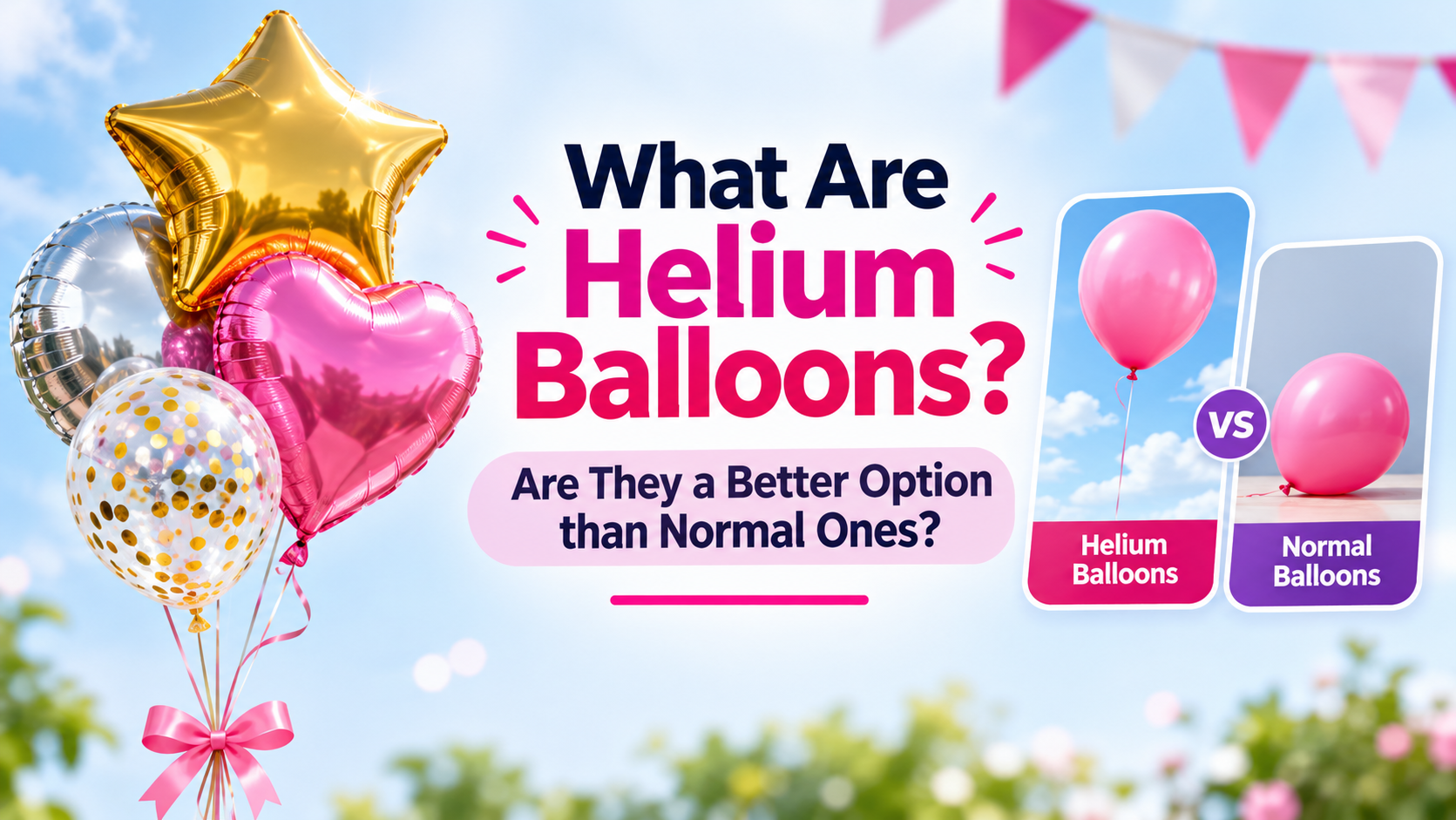
But not all balloons are equal, and the difference comes down to what is inside them. This guide explains what helium balloons are, how they work, which types are available and whether they are a better option than air-filled balloons for your next event.
Key Takeaways
- Helium balloons float because helium gas is lighter than the surrounding air.
- Latex helium balloons last up to 24 hours; foil balloons can float for several weeks.
- Air-filled balloons are better suited to arches, garlands, columns and wall displays.
- For floating centrepieces and ceiling installations, helium is the right choice.
- Many event decorators combine both types to get the best visual result at any venue.
What Are Helium Balloons?
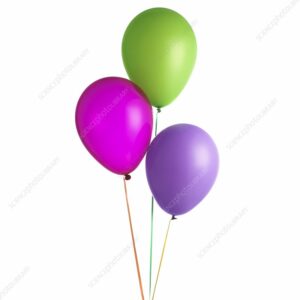
Helium balloons are balloons filled with helium gas rather than regular air. Helium is a colourless, odourless, non-toxic and non-flammable gas that is lighter than the air around us. When a balloon is filled with helium, its overall density drops below that of the surrounding air, which is why it rises and floats rather than falling to the ground.
Types of Helium Balloons
Not all helium balloons behave the same way. The material makes a significant difference to how long they float and how they look.
1. Latex Balloons
Made from natural rubber, latex balloons are the most common and affordable option. They are biodegradable and work well for same-day events. The downside is that helium escapes through the porous latex surface relatively quickly, meaning most latex helium balloons will only float for up to 24 hours. Balloon treatment sprays can slow this process and extend float time modestly.
2. Foil (Mylar) Balloons
Foil balloons are made from a nylon film with an aluminium coating, giving them their shiny metallic appearance. The barrier coating holds helium far more effectively than latex, so properly sealed foil balloons can float for several days to several weeks. They are available in a huge range of shapes, sizes and printed designs, making them popular for birthdays, celebrations and branded events. They are not biodegradable, so disposal needs care.
3. Bubble Balloons
Bubble balloons use a transparent, stretchy film that gives them a distinctive round, wrinkle-free appearance. They are durable, hold helium well and are available in various sizes. Some designs allow smaller balloons to be placed inside the outer bubble for a layered look. Like foil balloons, they are not biodegradable and sit at a higher price point than latex.
Air Filled vs Helium Filled Balloons: Key Differences
The choice between air filled and helium filled balloons comes down to what effect you want to create and where the balloons will be used. Here is a clear side-by-side comparison:
| Feature | Helium Balloons | Air-Filled Balloons |
| Float | Yes, rises and hovers in the air | No, stays where placed |
| Cost | Higher (helium + inflator needed) | Lower (pump is enough) |
| Equipment | Helium tank or balloon shop | Hand pump or electric pump |
| Best For | Floating displays, centrepieces, releases | Arches, garlands, columns, wall decor |
| Float Duration | Latex: up to 24 hrs; Foil: days to weeks | Stays inflated for days or weeks |
| Eco Consideration | Responsible disposal required | Responsible disposal required |
Helium Balloons vs Normal Balloons: Which Is Better?
The honest answer is that neither is universally better. Each has a clear role, and choosing the right one depends entirely on your event setup and what look you are going for.
Helium balloons are the better choice when you want balloons to float, hover above tables or fill a space vertically.
They work beautifully as centrepieces, photo backdrops with floating clusters or as a floating ceiling layer in a decorated venue. If you are planning a balloon release, helium is the only option. The trade-off is cost: helium is a finite and increasingly expensive resource, and hiring or buying a tank adds to your budget.
Air-filled balloons are the better choice for structures. Balloon arches, columns, garlands and wall installations all use air-filled balloons because they hold their shape better, last longer without deflating and do not require expensive equipment. For large-scale decorations where you need hundreds of balloons, air filling is far more practical and cost-effective.
Many event decorators combine both, using helium for floating elements and air-filled balloons for structural displays, to get the best of both approaches.
How Long Do Helium Balloons Float?
Float time varies by balloon material and conditions. As a general guide.
- Latex helium balloons: up to 12 to 24 hours without treatment; up to a few days with Hi-Float treatment spray
- Standard foil balloons: 3 to 5 days on average, often longer when properly sealed
- High-barrier foil or bubble balloons: several weeks and in some cases over a month
Heat, humidity and altitude all affect float time. Balloons inflated in an air-conditioned room and moved outdoors into heat may deflate faster than expected. If your event runs across multiple days, foil or bubble balloons are the more reliable choice.
Must Read: Balloon Arch vs Balloon Garland: Which One Wins Your Party?
Conclusion: Which Balloon Is Right for Your Party?
Helium and air-filled balloons each have a clear job. Helium balloons are the choice when you want that magical floating effect, such as centrepieces, grand entrances and balloon releases. Air-filled balloons cost less, stay inflated for days or weeks, and work well for arches, garlands, columns and wall decor. Whichever you choose, dispose of your balloons responsibly once the celebration is over.
Many of the best party setups use both: helium for the “wow” moments overhead, and air-filled balloons for the structured decor that holds the room together.
Ready to Plan Your Balloon Display?
At Party House, you’ll find a wide range of latex balloons, foil balloons and balloon accessories to suit every theme, colour palette and budget. Planning a milestone? Browse our birthday balloons and number balloons. Need a few extras for your setup? Pick up a hand pump and balloon ribbon to finish the job.
Whether you’re floating helium balloons above the dessert table or building a show-stopping garland, Party House has everything you need to bring your party to life. Shop our full balloon range today and make your next celebration unforgettable.
Frequently Asked Questions
Q1. Why do helium balloons float?
Helium is lighter than air. When a balloon is filled with helium, its overall weight becomes less than the weight of the air it displaces, causing it to rise and float.
Q2. Can you add air to a helium balloon?
Yes, but adding air to a helium balloon will increase its density and reduce or stop its ability to float. If you need a balloon to float, it should be filled with helium only.
Q3. Are helium balloons safe?
Helium balloons are non-toxic and non-flammable, making them safe for use at events. However, inhaling helium directly from a balloon is dangerous and should always be avoided.
Q4. How long do foil helium balloons last?
A properly sealed foil helium balloon can float for several days to several weeks depending on the quality of the material and storage conditions. Keeping them away from heat and sharp objects extends their lifespan significantly.
Q5. Are air-filled balloons better for the environment than helium balloons?
Both types require responsible disposal. Helium is a finite resource, so using less of it is preferable where floating is not needed. For large structural displays, air-filled balloons are both more cost-effective and avoid unnecessary use of a limited gas.