
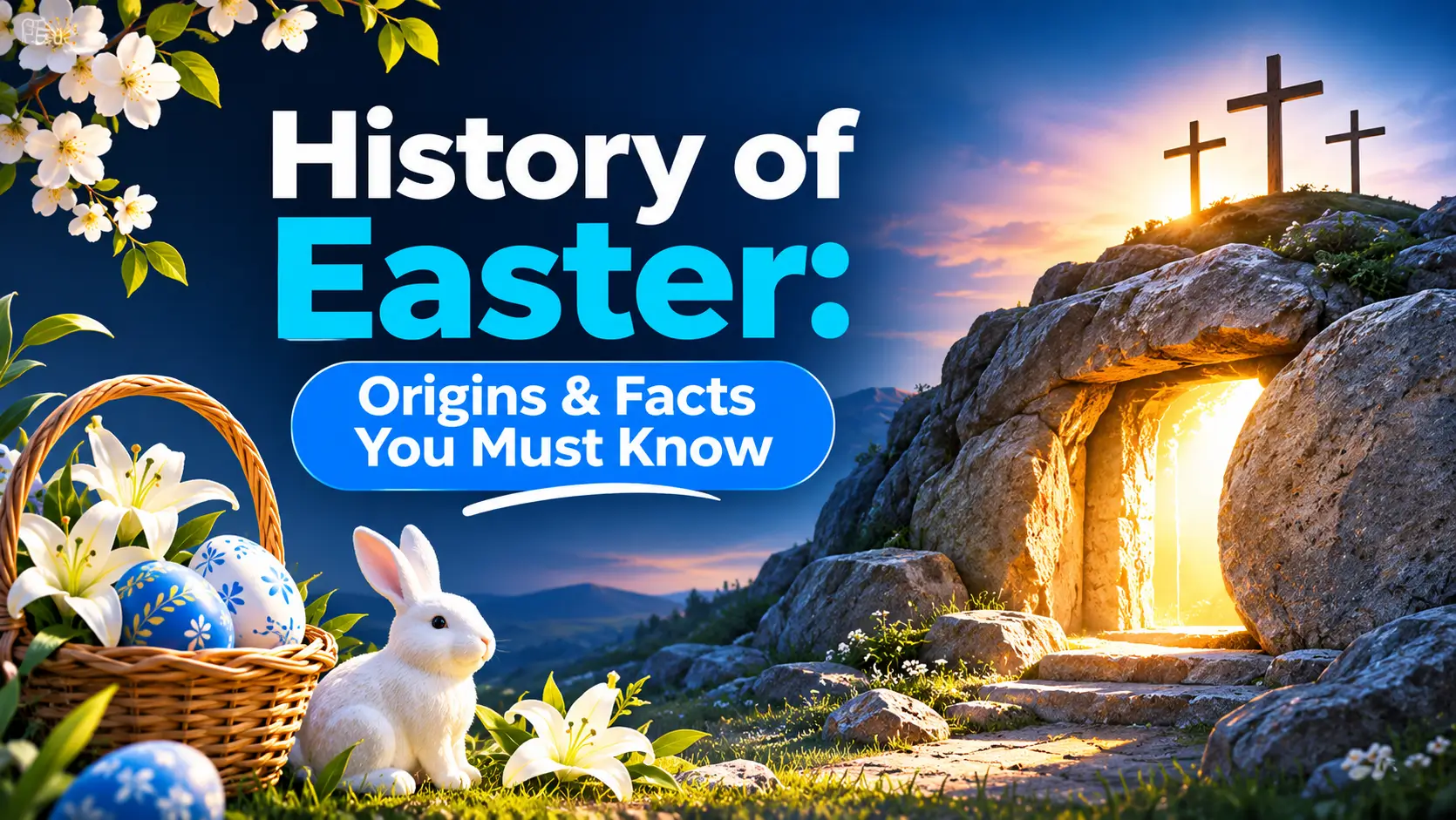
Easter is one of the most widely observed holidays in the world, celebrated by Christians and non-Christians alike. Whether you have grown up attending sunrise church services or remember the thrill of hunting for chocolate eggs as a child, the history behind Easter stretches back thousands of years.
This guide traces the history of Easter from its ancient origins to its modern customs, covering what the festival means, how its date was established and where its most familiar symbols come from.
Key Takeaways
- Easter commemorates the resurrection of Jesus Christ and is the most important date on the Christian calendar, observed on the Sunday after the first full moon following the spring equinox.
- The name Easter in English and German comes from Eostre, an Anglo-Saxon spring goddess; most other languages name the festival after Passover, reflecting its Jewish and Christian roots.
- The Council of Nicaea in 325 AD standardised the date of Easter using a formula that Western and Eastern Orthodox churches still apply today, though sometimes on different Sundays.
- Easter eggs, the Easter Bunny and the Easter lily blend pre-Christian spring symbolism with Christian meaning, with roots stretching back to ancient spring and fertility traditions.
- The chocolate Easter egg was invented in 19th-century England and Germany and has since become one of the most commercially significant traditions associated with the festival.
What Is the Easter Festival?

Easter is the Christian celebration of the resurrection of Jesus Christ, observed on the Sunday following the first full moon after the spring equinox. It is the most significant date on the Christian calendar. What is easter festival at its core is a proclamation of resurrection: Jesus was crucified on a Friday, and his followers discovered the empty tomb on the Sunday that followed.
Churches observe Easter with services, prayer and communal celebration, while families gather for meals, egg hunts and chocolate.
The Origin of Easter: Christian Roots and Pagan Layers
The origin of Easter as a Christian observance begins in Jerusalem, approximately 2,000 years ago. Jesus was crucified on a Friday and rose from the dead on the Sunday that followed, and the early Church gathered every Sunday in commemoration.
Beneath this Christian story is a much older history: peoples across the Northern Hemisphere had long marked the spring equinox as a time of renewal and the return of warmth after winter. When Christianity spread through these communities, the seasonal themes of new life found natural parallels in the resurrection message, and existing spring festivals gradually merged with Christian observance.
The name Easter reflects this blending. The 8th-century English monk Bede recorded that the Anglo-Saxon name for April was Eosturmonath, named after a spring goddess called Eostre. In German the equivalent is Ostara.
Most other European languages name the festival after Passover instead: Paques in French, Pasqua in Italian and Pascha in Greek, reflecting Easter’s direct theological connection to the Jewish festival that was taking place when Jesus died.
Suggested Reading: 10 Christmas Party Ideas that your Guest will Never Forget
How the Date of Easter Was Decided
One of the most important easter history facts concerns how the festival’s date was standardised. For the first three centuries, different communities observed Easter at different times. In 325 AD, the Council of Nicaea, convened by Emperor Constantine, resolved the dispute: Easter would fall on the Sunday after the first full moon following the spring equinox. This calculation, using an ecclesiastical rather than a visible full moon, is still applied today.
Western and Eastern Orthodox churches sometimes observe Easter on different Sundays because they use different calendar systems.
Easter Symbols and Where They Come From
Here are some Easter symbols and where they come from:
- Easter Eggs: Eggs have represented new life and fertility across many cultures for thousands of years. Ancient Babylonian traditions associated eggs with spring goddesses of fertility. During the Middle Ages, Christians decorated eggs and ate them to mark the end of Lent, during which eggs were forbidden. Painted and exchanged eggs became a common Easter practice across Europe, and the modern egg hunt grew from these older customs.
- The Easter Bunny: Hares and rabbits were long associated with spring fertility and with the goddess Eostre. The earliest known written reference to an Easter Hare appears in a 1722 German text by Georg Franck von Franckenau, describing a hare that hides coloured eggs for children to find. By the 19th century, greeting card companies had popularised the Easter Bunny image across Europe and America, where it became central to the festival’s commercial iconography.
- The Easter Lily: The white lily is a prominent Easter symbol in Christian traditions, associated with purity and resurrection. One legend connects lilies to the Garden of Gethsemane, where Jesus prayed before his arrest. White lilies are widely used in church decorations on Easter Sunday, alongside daffodils, hyacinths and tulips.
Chocolate Eggs and the Commercialisation of Easter
The chocolate Easter egg is a 19th-century invention. Cadbury in England was among the first to market recognisable chocolate eggs, in the 1870s. Germany produced edible sugar and pastry bunnies around the same period. By the 20th century, the commercial side of Easter had grown into a major seasonal industry, with chocolate, decorations and easter party supplies australia and around the world reflecting the festival’s imagery of eggs, bunnies and pastel colours.
The history of Easter is a layered story of faith, season and tradition. At its centre for Christians is the resurrection of Jesus Christ. Around that centre have gathered centuries of symbol and custom: the egg, the bunny, the lily and the chocolate. Whether the season arrives in spring or in the Southern Hemisphere’s autumn, Easter carries with it one of the longest and richest histories of any holiday observed across the modern world.
Frequently Asked Questions
Q1. What is the history of Easter in brief?
History of Easter spans thousands of years, from pre-Christian spring equinox festivals through the Christian proclamation of Jesus’s resurrection, the Council of Nicaea’s standardisation of its date in 325 AD, and the modern celebration with its eggs, bunnies and chocolate.
Q2. What is the Easter festival and why is it celebrated?
Easter is the Christian celebration of the resurrection of Jesus Christ, observed as the cornerstone of Christian faith. Many non-Christians also mark Easter as a cultural holiday, participating in egg hunts, chocolate traditions and family gatherings.
Q3. What is the origin of Easter eggs?
Eggs have symbolised new life across many ancient cultures. During the Middle Ages, Christians decorated eggs and ate them to break the Lent fast. The modern egg hunt and chocolate egg tradition grew from these older customs in the 19th century.
Q4. Why does Easter fall on a different date each year?
Easter is a moveable feast. The Council of Nicaea set it as the Sunday after the first full moon following the spring equinox, so the date shifts each year between late March and late April.
Q5. How is Easter celebrated in Australia?
Australia celebrates Easter in autumn rather than spring, but the same traditions apply: church services, egg hunts, family gatherings and hot cross buns. Easter party supplies australia reflects the same Northern Hemisphere imagery of eggs, bunnies and pastel colours regardless of season.