
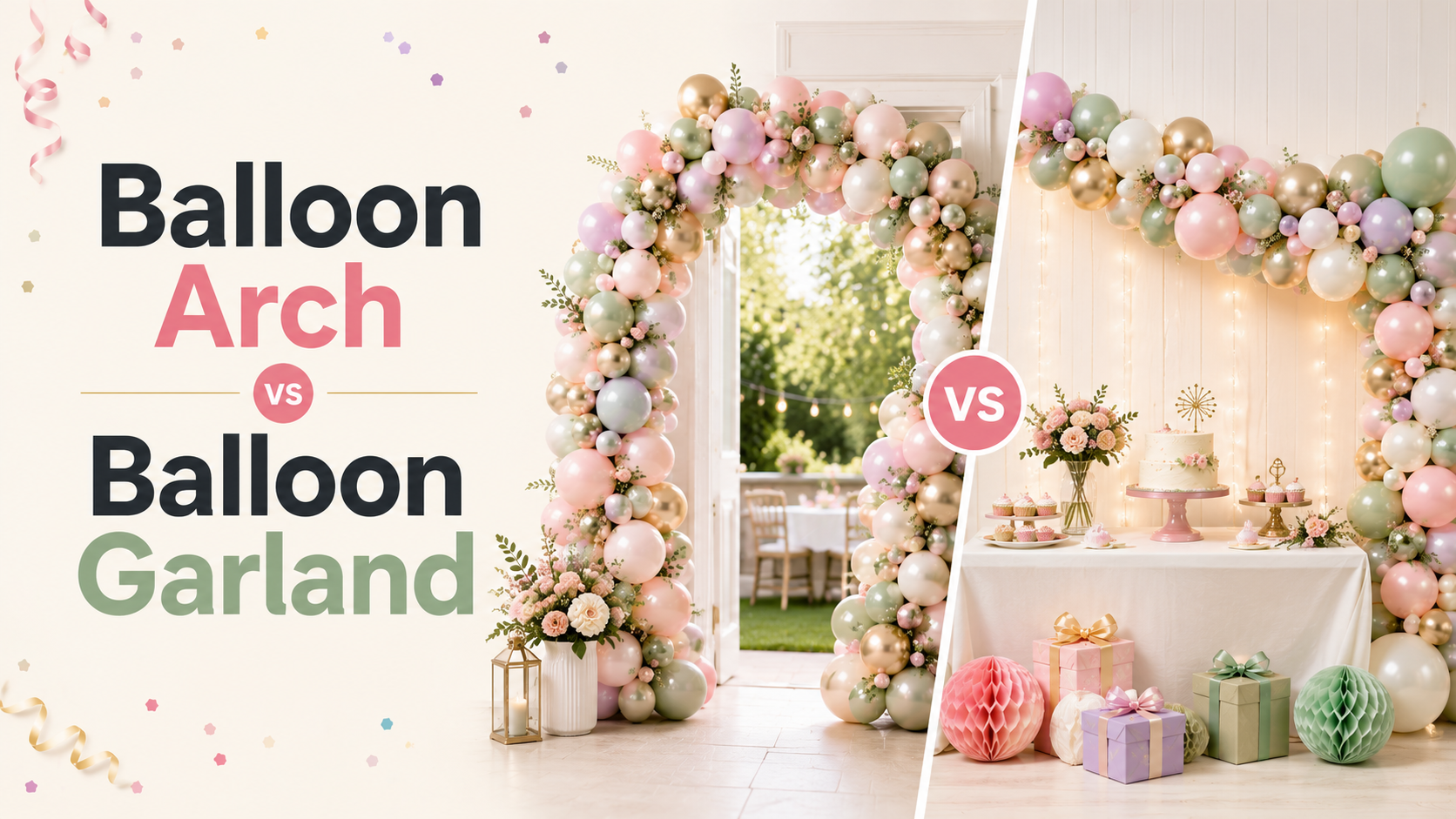
Scrolling through party inspiration, you’ve probably seen two balloon decor styles dominating every feed: the dramatic curved balloon arch and the flowing, organic balloon garland. They can look similar at first glance, but they’re built differently, cost differently, and suit different kinds of events. If you’re stuck choosing between a balloon arch vs balloon garland for your next celebration, here’s everything you need to know before you buy a single balloon.
Key Takeaways
- A balloon arch is a structured, curved design, while a balloon garland is a flowing, organic arrangement.
- Garlands offer more flexibility and texture; arches make a bolder, more symmetrical statement.
- Garlands are often better for birthdays and weddings seeking a soft aesthetic; arches suit entrances and photo backdrops.
- Neither style has to be filled with helium; many modern designs use air-filled balloons on a frame or tape instead.
- Your event style, space, and budget will help you decide between the two.
What Is a Balloon Arch?
As the name suggests, a balloon arch is made up of balloons arranged in a way that looks like an arch. They are often used as an entrance, photo backdrop, or stage feature. Traditionally, balloon arches were made using helium-filled latex balloons tied to a frame or string, but modern balloon arch kits now make it easy to build air-filled arches without any helium at all. Arches tend to have a fuller, rounder, more symmetrical look.
What Is a Balloon Garland?
A balloon garland is a more organic, flowing arrangement of balloons in varying sizes, typically attached to a balloon strip or balloon tape rather than shaped into a strict arch. Garlands can be draped along a table, wrapped around a staircase, hung on a wall, or shaped loosely overhead. They mix latex balloons, foil balloons, and sometimes confetti or metallic balloons for texture and visual interest.
Balloon Arch vs Balloon Garland: Key Differences
Shape and Structure
Arches are curved and structured, usually forming a clean arc or doorway shape. Garlands are more freeform and can be styled into swoops, waves, or straight runs depending on the space.
Balloon Variety
For a more layered and textured look, garlands often use a wider range of balloon sizes and finishes, such as chrome balloons, pastel balloons, and foil accents. Arches tend to use more uniform balloon sizes for a cleaner, symmetrical effect.
Setup Method
Arches often use a frame, balloon strip, or arch stand as their base. Garlands rely more heavily on balloon tape and glue dots to attach balloons directly to a wall, table, or railing.
Best Use Case
Arches work beautifully as entrance pieces, photo booth backdrops, or stage focal points. Garlands are also a more versatile choice for table runners, staircases, or as accents to a balloon backdrop.
You can learn more about the types of balloons explained, which is worth a read before you start mixing finishes and sizes.
Balloon Arch or Balloon Garland for Birthday Party?
For birthday balloon decorations, garlands are often the easier, more budget-friendly choice for smaller home setups, while arches make a bigger visual statement for larger parties or milestone celebrations. If you want both drama and flexibility, many hosts combine a smaller garland with a single arch feature as the centerpiece.
Balloon Arch vs Balloon Garland for Wedding
For a soft, romantic, and natural look, wedding garlands are often a favorite. They look especially good with pastel balloons and greenery. Arches, on the other hand, make a striking statement piece for ceremony backdrops or reception entrances. There’s no wrong choice here; it comes down to the overall aesthetic you’re going for.
Cost Comparison
Generally, a DIY balloon arch requires fewer total balloons than a full garland of the same length, which can make it slightly more budget-friendly. However, garlands are more forgiving for beginners since gaps and size variation are part of the intended look, while arches need more precision to look clean and symmetrical.
DIY Tips for Both Styles
- Use a balloon pump to save time and get consistent balloon sizes
- Mix latex and foil balloons for texture, especially in garlands
- Always test your balloon tape or balloon strip strength before hanging heavier arrangements
- Blow balloons slightly under full size to avoid popping during setup
- Use glue dots for extra security on statement balloons
If you’re building your first design, this guide on How to Make a Balloon Arch at Home breaks down the process step-by-step.
Where to Get Your Supplies
Once you’ve decided on your style, quality balloons make a noticeable difference in how long your display lasts. You can buy balloons online in bulk for larger installations, and if you’re planning a themed celebration, this list of best balloon decorations for birthday parties offers plenty of inspiration. For ready-made kits, party décor essentials, and everything in between, Party House is a reliable source for hosts putting together both arches and garlands without the guesswork.
Frequently Asked Questions
How many balloons do I need for a balloon arch?
It depends on the arch size, but a standard 6-8 foot arch typically needs 80-150 balloons of mixed sizes.
Does a balloon arch require helium?
No. Most modern balloon arches are air-filled and built on a frame or balloon strip, making them longer-lasting than helium versions.
How long does a balloon arch last?
An air-filled latex arch typically lasts 1-2 weeks indoors, while helium versions usually last only 1-2 days before deflating.
Do balloon garlands need helium?
No, garlands are almost always air-filled since they’re attached to tape or strips rather than floated.
How long will a balloon garland last indoors?
With good quality latex balloons, an indoor garland can last around 1-2 weeks, depending on humidity and temperature.